
=VG= Inch
-
Posts
548 -
Joined
-
Last visited
Content Type
Profiles
Forums
Events
Downloads
Gallery
Articles
AVCS Bug Reports (automated)
AVCS Bug Reports (manual)
VG Wiki
Blogs
Store
Everything posted by =VG= Inch
-
@Cruizer what's so good about NVIDIA VGA's really? I've been using GT 210 for a long time really shows me it's age (sometimes graphic bugs hits me in PR causing me to delete shader cache to fix it) I'm looking for good and cheapest AMD VGA's probably in future PC builds, any ideas or should i stick to NVIDIA stuff all over again? I'm trying to avoid Intel as they mostly (still) expensive here than AMD's. So far, i found RX 480 and 570/580 ones being recommended, is it any good? ***I'm just playing PR as in for now (with so many games at library, not sure what to pick one to play, as my currently can't handle all of them)
-

Operation Shifting Sands: 16th March
=VG= Inch replied to =VG= Melon Muncher's topic in PR Cooperative
Minus the briefing (need moar), the event was good enough for my immersion, especially when people are also on opfor side ones. Can't wait for another one, count me in. -
Operation Shifting Sands: 16th March
=VG= Inch replied to =VG= Melon Muncher's topic in PR Cooperative
I'll be on as CO in Mission 2, hopefully it will go down well. Assign meh~ -
I know i've seen this before, i would love to have a standalone Milkor MGL in PR. Say for SANDF, might be in future.
-
I'll try jump in, once i got enough caffeine intake that necessary for staying awake lol-
-
Important message.
I still have no job at 26, damn.
Can we go even further?
Hope not...


I'm not bday type of guy, but thanks for reminding me that i still age.
Cheers,
- Inch
-
-
 1
1
-
- Report
-

Idk should i laugh or be sad?
Your time will come at the right moment my friend!
-
-
 1
1
-
- Report
-
If i got a job, means less time for PR

No job, means spending more time in PR (up to 8 hours, even on low pop lol-
)
-
-
1
-
- Report
-
Or if you find a job which allows you to have laptop or PC, of course, with PR on it


There is always something to sacrifice...
I sacrifice sleeping time, eating time, mental and physical health, friends and family and beer... Just to have more time for PRBF2
-
-
 1
1
-
- Report
-
It's been awhile, i can safely say this now:
Happy holidays to everyone, let's make the next year even better than this year. Even though there's still a lot going on out there, please stay healthy and safe as always. It's your top priority, soldier! Survive the last month of this year!
Cheers,
- Inch
-
Stationeers: First Year on Mars - Base Tour
=VG= Inch replied to =VG= SemlerPDX's topic in Other Games
Sadly my potato PC wont allow this. Looks like a genuinely fun game to play, maybe in future i'll check this one out for sure. -
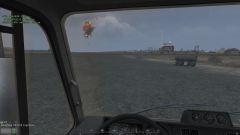 Mid-air explosions are always a great stuff-
 -
It's Cap'n Cook! I sure remember that name the first time met him couple of days ago. Lol-
-
1693129069698327610518349383522.jpg
=VG= Inch commented on Vanillapop's gallery image in Show off your Computer!
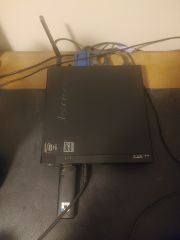 This gave me trippy feeling. I've never seen a smaller cpu's out there that looked like this.
 -
Hell, i would like to see the map in 4km size, so it will be a big impact for the PR community lol- From what i've heard, there's a big chance if you make a map in 4km to be implemented in-game, if it's good in every aspect. My 2 cents.
-
This ain't a blog. It's a thread. You need to take a chill pill and move on, let's hope @=VG= Zeee make something from those removed maps. If that ever going to happen, Jabal should have been a 4 km map anyways (meaning less chance of being removed).
-
There few things i realized: - Panther is Tigr in disguise. Shijia Valley proves it (the TK was made). - DON'T EVEN ASK FOR LAZE FOR CANNONS AGAINST INF'S, because they'll just drop bombs anyway and no excuses. (Tbh, i've been asking this a lot for CAS squads, damn they're thirsty for bombs.) - Watch left and right before crossing, even better is to stop and check your map before you smash into someone (especially when you're sparking). - The last clip someone speaking Arabic (la haula) was nothing offensive, it's a short of "There is no power and no effort except with the power of Allah, the Most High, the Most Great." Cheers, - Inch
-
Do i have to start playing all the way from Gold Edition or Cold War? Teach me.
-
That's my take, the other ones that still on question mark aren't done yet since i've never played the layout. I still have some other list that i'll share here as well for map priorities, some still experimental.
-
project reality PR Guns - The 2A42 (For those who still looking for the "real" Beast)
=VG= Inch commented on =VG= Inch's blog entry in The Almanach of Firepower
Thanks, i'll update this soon. Apparently this got more reactions in a day. So, stay tuned. -
Hey guys, it's been a long time no see around. Finally i had encourage myself to write down some military things again, quite a challenge to be honest. I've been busy most of my time, but now i have time and hopefully this not going to be the last. Today we'll be talking about the KTO Rosomak, the Polish 8x8 wheeled armored personnel carrier for Polish Land Forces that also appear in Project Reality for Polish faction. Let's get into it! - What is KTO Rosomak? Why did it exist? The KTO Rosomak (Kołowy Transporter Opancerzony Rosomak or in Polish lit. wheeled armored personnel carrier Wolverine) is an 8×8 multi-role military vehicle produced by Rosomak S.A. (formerly Wojskowe Zakłady Mechaniczne) in Siemianowice Śląskie (Upper Silesia), a Polish Armaments Group company. The vehicle is a licensed variant of Patria's armored modular vehicle. The vehicle were produced in many versions and successively modified in Poland based on the licensed base version of the Patria AMV XC-360P vehicle, designed by the Finnish company Patria. It is in service with the Polish Armed Forces. In the basic version, it is armed with a 30mm autocannon in the OTO-Melara HITFIST turret. Base vehicle without the turret installed, note on how flat the upper part of the vehicle and missing smoke dischargers. - History of the vehicle, what's the APC made for? Designed to meet Polish criteria, including the buoyancy requirement, by the Finnish company Patria Vehicles, under the name Patria AMV (Armored Modular Vehicle). In December 2002, the construction was selected by Poland in a tender for wheeled armored personnel carriers. It was assumed that the basic version would be armed with an automatic cannon, being in fact an infantry fighting vehicle according to international agreements. The new APC were to replace the obsolete Czech OT-64 SKOT APC's and partially the BWP-1 IFV currently in service with the Polish Land Forces. The name "Rosomak" or "Wolverine" was chosen in a competition organized by the monthly magazine, Nowa Technika Wojskowa. The old but gold, Polish OT-64 SKOT armored personnel carrier and BWP-1 infantry fighting vehicle. In December 2002, the Polish Ministry of National Defense signed a contract to buy 690 Patria AMV vehicles, to be manufactured in Poland. The main competitors of the AMV were the MOWAG Piranha and Steyr Pandur. As part of the initial order, 690 vehicles were to be delivered in two basic variants: 313 combat IFVs and 377 transport-special base vehicles. In October 2013 the order increased to 997 for delivery between 2014 and 2019. The competitors of Polish APC program, from left to right: Patria AMV from Finland (winner), MOWAG Piranha IV/V from Switzerland and Steyr Pandur II from Austria. The contract for the supply of KTO Rosomak (a variant of the AMV XC-360P) in the years 2004-2013 was signed on April 15, 2003. 600 of the 690 ordered vehicles were produced in Wojskowe Zakłady Mechaniczne in Siemianowice Śląskie. The Ministry of National Defense was to pay almost 5 billion PLN (new Zloty, Polish monetary unit) for the delivery of 690 Rosomak armored personnel carriers in the years 2005–2012. This amount included the cost of 313 OTO-Melara HITFIST-30P (30 mm) turrets from Italy, for 308 million USD (including 241 ones that are license-produced in Poland). The actual cost turned out to be higher due to unplanned armor reinforcement and other modifications necessary mainly for Polish military contingents. The value of the HITFIST-30P turret supplied by Bumar is 53% of the value of the vehicle, and the price of a single vehicle was approximately 10 million PLN. Patria AMV XC-360, tested in a field. Soon it renamed into XC-360P for Polish Armed Forces adoption and earned the nickname "Rosomak" or "Wolverine". Note the Remote Weapon System mounted on top, could be what we would saw of cancelled Rosomak-1 with RWS module. By the decision of the Chief of the General Staff of the Polish Armed Forces of December 31, 2004, the vehicle was accepted for armament. The first KTO Rosomak, made in 2004, were handed over to the Army on January 8, 2005 (three in the combat version with the HITFIST-30P turret and 6 basic without armament). In addition to these, in 2005, 82 Rosomaks were delivered to the Army, including 42 base chassis, and in 2006, 39 vehicles (only base chassis). The model became copy No. 41, on which minor corrections required by the Army were introduced. Ultimately, on the basis of the first contract, the Army received a total of 570 vehicles, including 359 in the IFV version. The initial plans assumed the order of 690 vehicles, including: 313 Rosomak armored personnel carriers with a HITFIST-30P turret (for Infantry Fighting Vehicle or IFV role) 125 Rosomak-1 armored personnel carriers with a machine gun (possibly with mounted UKM, NSW, WKM-B in NATO 50 Cal. or automatic grenade launchers, such as Mk. 19 etc.) 78 command vehicles 41 medical evacuation vehicles 34 technical assistance vehicles 32 reconnaissance vehicles (6×6) 23 artillery vehicles 22 engineering vehicles 17 chemical reconnaissance vehicles 5 engineering reconnaissance vehicles KTO Rosomak and Rosomak-1 APC's. Although Rosomak-1 didn't enter service in the Army, the successor Rosomak-M2 and M3 did enter, deployed and serve in Afghanistan. At the same time, the Rosomak-1 APC and specialized versions were to be armed with a remotely controlled module with a 12.7 mm machine gun (249 vehicles in total), while 89 out of 313 HITFIST-30P turrets were to be integrated with Spike-LR anti-tank missile launchers. For a long time, other versions were not yet ready and the only variant actually produced was the Rosomak IFV with the HITFIST-30P turret and unarmed base chassis, mostly stored and awaiting selection of armament and equipment. In 2007, the 6×6 armored personnel carriers were abandoned, and it was decided to base the Rosomak R1/R2 reconnaissance vehicle on the construction of an eight-wheeled infantry fighting vehicle. Finally, it was decided to use some of the basic chassis to develop a transport variant for two sections of Spike missiles (27) and a medical evacuation vehicle (33). Several more chassis were handed over to construct prototypes for other variants. As a result, in 2008, the Army received 27 Rosomak S APC, easily adapted to transport Spike ATGM sections, and the first 6 Rosomak WEM medical evacuation vehicles with a raised superstructure in the rear part. The next Rosomak WEM's, delivered from 2009, differed in the target wider form of the superstructure, providing more space. In 2007, due to the involvement in peacekeeping missions, some of the basic vehicles were used to create a previously unforeseen logistics and transport variant, equipped with an open firing position with a cupola, shielded around. The first version, intended for the Chad contingent, had a lighter OSS-M (sort of open turret, light version) and 6 of them were built in the first half of 2008. The second version, intended for Afghanistan, had a heavier OSS-D (manufacturer's designation: M3) that are better protected. The first batch of 10 units was completed at the end of 2008, and further 11 are planned for the following year. These vehicles also received additional armor. In addition to the rebuilt, in 2008 the Army received 46 new combat Rosomaks. In 2012, a prototype version with a self-propelled Rak mortar was presented for the first time. The interior of Rosomak-WEM. In July 2013, Patria Land Service extended the license free of charge for another 10 years, recognizing the right to further Polish construction changes and exports as well as repairs for 40 years. Since 2013, the manufacturer has offered better armor for Rosomak, based on nanotechnology. In the same year, the delivery of another 307 vehicles was contracted. A total of 298 Rosomak chassis have been delivered under this contract by 2020. In 2015, the manufacturer and the Finnish side presented two more vehicles: Polish Rosomak M, with increased buoyancy the Finnish-Polish Rosomak XP, larger than its predecessors. They were created with the use of components and the sum of experience gained during the construction and use of the Rosomak. The improved armor was developed in cooperation with IBD Deisenroth Engineering. In the same year, the manufacturer offered a version with a built-in 120 mm automatic mortar, presented as the Wilk fire support vehicle. Rosomak-M and Rosomak-XP in a presentation. In 2007, WZM signed a contract for the production of five transporters for export in 2008 for Patria, which, after extending them by 35 cm (to the AMV 8×8, L version) and equipping them, was to deliver them to the United Arab Emirates. Export orders have been carried out since 2016 and driver training is also conducted in simulators. In April 2016, the Ministry of National Defense decided to start purchasing Rosomak-based Rak vehicles. From 2013, a version with a remotely controlled ZSSW-30 turret system, armed with a dual Spike LR ATGM launcher, a 30 mm caliber Bushmaster Mk. 44 S automatic cannon and a 7.62 mm caliber UKM-2000C coaxial machine gun, was developed by the HSW and WB Electronics consortium from 2013, at the request of the Army. A prototype of the turret was built in 2015; the program experienced delays for various reasons, but in 2020 the tower successfully passed military qualification tests. The turret is equipped with an automated fire control system by WB Electronics, Polish stabilized optoelectronic viewport GOD-1 (commander) and GOC-1 (gunner) by PCO, with thermal and television cameras and a laser rangefinder, and the SSP-1 Obra self-defense system with eight launchers of multispectral camouflage grenades. These turrets can also replace the older HITFIST-30P turrets, which are slightly lighter. The gun in the Bushmaster Mk. 44 S version allows the use of programmable ammunition. On July 5, 2022, the Ministry of National Defense signed a contract with the consortium worth about 1.7 billion PLN for the supply of 70 Rosomak wheeled IFVs equipped with ZSSW-30 turrets. They will be created from the reconstruction of the base vehicles, and the contract will be implemented in the years 2024-2027. However, due to the deterioration of the characteristics while sailing and the lack of an order for the manufacturer to improve this parameter, it was decided that the Rosomaks with the ZSSW-30 turret did not continue for production. In this version, they are equipped with six landing seats, including two on the starboard side. Possible earlier prototypes in presentation of KTO Rosomak Heavy IFV, with ZSSW-30 turret system with Spike ATGM's mounted on left side of the turret. In 2019, the Polish Army ordered two command vehicles (delivered in 2020), and eight more in 2020. In 2020, 60 base vehicles were also ordered to be converted to the Rosomak-S version for transporting Spike missiles. The license agreement for the production of vehicles was supposed to end in 2023, but at the end of September 2022 it was extended by an annex until the end of 2028. - Main body construction, how strong is the chassis? KTO Rosomak is built in an 8×8 system (with all-wheel drive). The combat Rosomak can carry 11 people (driver, commander, gunner and 8 passengers/troops). The hull is self-supporting, monocoque, welded from armor steel. Under the fuselage there is a suspension bracket in the form of a truss, to which suspension elements are attached, stiffening the structure. The interior of basic KTO Rosomak. Passenger seats are being folded. At the turn of 2005 and 2006, a gradual (although not complete) Polonization of Rosomak production was carried out. The first vehicles were mostly made in Finland and completed in Poland, and from Spring 2005 their hulls began to be welded at WZM. It was originally assumed that only 40 vehicles were to be of Finnish production, but the Polonization process was delayed and 9 vehicles were made in Finland in 2004 and 81 in 2005. On December 14, 2005, the first copy produced in Poland was presented. Initially, in 2005, 21% of the transporter's value came from Polish deliveries, in 2009 - 78%, and in 2011 - 94%. Chassis modules (frames with drive transmission) were initially manufactured in Finland, and from mid-2006 in Komas in Janów Lubelski (owned by the Finnish Komas Oy), using imported steel and components. Since 2009, armored steel has been supplied by HSW-Huta Stali Jakościowych SA from Stalowa Wola (earlier series of vehicles were made of imported steel). The bodies of the Rosomaks are welded from Armstal 500 (30PM) sheets with a hardness of 500HB (except for the floor from Armstal 450 sheets), external armor elements (in the floating version) are also made of Armstal 500 steel. Additional armor was made of Armstal 550 steel with a hardness of approx. 580HB. OTO-Melara HITFIST-30P turrets were initially imported complete from Italy, since 2007 they have been assembled by Bumar Łabędy, and as Polonization progresses, they have been produced there since 2010 (welded from aluminum). Closer interior view of KTO Rosomak, for gunner seat (left) and driver seat (right). The HITFIST-30P turret itself was made of armored aluminum and equipped with additional ceramic armor. The armament is controlled by a fire control system equipped with a DNRS-288 day/night sight, a 2nd generation TILDE FC thermal imaging camera and a laser rangefinder. Since 2016, thermal imaging cameras can be replaced during renovations with new Polish third-generation cameras KLW-1R by PCO. Additional equipment is a set of sensors of the SSP-1 Obra-3 system and a smoke grenade launcher. The curb weight of the turret is 2350 kg, and the combat weight is 2850 kg. The turret traverse is possible in the full range of 360 degrees, and the armament elevation angles are between -10 and +60 degrees. The stock of ready-to-use 30 mm ammunition is 220 rounds, another 250 rounds are stored in two magazines under the turret. The equipment includes Pimco's chemical and radioactive contamination detection system CHERDES I, and since 2009 CHERDES II. - Armor packages, what's the APC offers? Controversy after the choice of armored personnel carrier aroused the issue of its armor. The political and media debate on this subject led to the destruction of one copy of the vehicle during firing tests in Poland. However, the armoring of the vehicle is typical for armored personnel carriers of this weight category, with the requirement of buoyancy. The armor is modular and can be reinforced. The main layer of the self-supporting hull was made of 8 mm thick steel sheet. At a distance of 35 mm from the main armour, an outer armour, 6 mm thick, is mounted. It can be replaced - as in the Finnish prototype - with ceramics or a composite, thus improving the armor ballistic resistance, but sacrificing the buoyancy. The level of protection of the Rosomak against 14.5 mm rounds from the front and 7.62 mm from other directions is typical and does not differ from, for example, the Stryker vehicles used by the US Army or other similar vehicles. The basic version of the vehicle has ballistic protection of the hull in the front 120 degrees at level IV according to the NATO STANAG 4569 standard (against 14.5 mm caliber ammunition at a distance of 200 m), and in the remaining range at level III (against 7.62×54 mm at a distance of 30 m or a 155 mm round burst at a distance of 60 m). The HITFIST-30 turret is welded from 17 to 25 mm thick aluminum plates and protects against 12.7 mm rounds in the forward range of 120 degrees, and against 7.62 mm rounds in the remaining range. Resistance against explosives and mines is up to 6 kg of explosive. The interior of the vehicle is lined with an aramid spall lining. KTO Rosomak in Polish service. Standard armored personnel carrier for the Army. The Ministry of National Defense accepted the buoyancy requirement as a priority, except for the version intended for Afghanistan. For vehicles intended for the Polish contingent in Afghanistan, in mid-2007, sets of additional armor were purchased from the Israeli company Rafael, mounted on the side, rear and front surfaces of the upper plate, ensuring resistance above level IV of the STANAG 4569 standard. 56 of such sets were ordered, the first of which were assembled in field conditions in Afghanistan before the end of July this year. The assembly time of the set by trained personnel is approx. 4 hours. Rosomak M3 with OSS-D open turret. Also in service for Polish Army in Afghanistan. Since 2010, Rosomaks have received Polish secondary armour, manufactured at HSW-Huta Stali Jakościowych, along with lightweight anti-HEAT screens. The front upper hull plate was covered with a 130 mm thick composite module, made of several plates of different thickness and hardness, probably sandwiched with aramid and other materials, with air gaps, providing protection against HEAT warheads equivalent to 330 mm of armor (RHA), and taking into account the slope - about 500 mm. It should also provide resistance against e.g. the older 30 mm ammunition of the Russian 2A42 cannons (used e.g. in the BMP-2). The sides received 8 mm modules of two layers of 10 mm thick steel, separated by a 75 mm air gap, which provided protection according to STANAG level IV. The turret received 40 mm thick composite armor modules made of ceramic tiles on an aramid base, also raising the shield to level IV. The combat weight of the armored Rosomak does not exceed 26 tons. Possible Rosomak-M3 version in Polish service at Afghanistan with 3 soldiers carrying Beryl assault rifle. Note the OSS-D open turret (with no mounted gun). In the M3 version, the OSS-D open turret had Tier III armor. Together with the use of modern RPGNet mesh side screens with metal elements at the intersection of wires, the additional armor provided a very high level of protection against the most common HEAT rocket launchers. It is even estimated in the literature that the Rosomak was the best protected wheeled combat vehicle in the theater of operations in Afghanistan until the appearance of the heavier GTK Boxer APC's. Explosions of mines, as a rule, only led to the destruction of repairable suspension elements, while the loss of vehicles and crews was mainly caused by large gaps, against which there is no effective protection. Despite this, it is estimated that the Rosomak performed relatively well in terms of crew protection against fugas explosions. After the return of about 100 Rosomaks used there from Afghanistan, additional armor was dismantled during repairs, apart from 6 reserve vehicles for subsequent missions. - Variants of KTO Rosomak, what are the roles? Rosomak - Infantry fighting vehicle variant with an OTO-Melara HITFIST-30P gun turret armed with a 30 mm ATK Mk 44 chain gun and 7.62mm NATO UKM-2000C coaxial machine gun. The turret has advanced fire control systems with thermal sights and an Obra laser warning system SSP-1 OBRA-3 manufactured by Bumar Soldier SA, connected to six 81 mm 902A ZM Dezamet smoke grenade launchers. The standard supply of ammunition is 80 APFSDS-T armor-piercing rounds and 120 MP-T multi-purpose fragmentation-incendiary-tracer rounds (only multi-purpose rounds can be used). Vehicles of this version used on missions outside the country had reinforced ballistic armor (Rosomak-M1) and with protection against HEAT rounds (RPG-7 and similar) with QinetiQ RPGNet (Rosomak-M1M). Other changes include installation of Duke anti IED system and Blue Force Tracking BMS system (systems on loan from US Army). All older ("green") Rosomaks in M1 standard also received RPG Net. Since 2022 Rosomak will be produced with ZSSW-30 unmanned turret armed with 30mm gun, UKM-2000 machine gun and Spike ATGM. The original Rosomak, this one in particular is amphibious. Note the water propellers on the rear of the vehicle. Rosomak-M2 and M3 - Armored personnel carrier variant modified for mission in Afghanistan equipped with similar task equipment (including additional armor) as M1 variant. The main difference is that this variant is equipped with OSS-D open turret with 40 mm Mk-19 grenade launcher or 12.7 mm NSW/WKM-B heavy machine gun. It's also possible to be mounted with other small arms (they could be 7.62 mm PKM or UKM-2000 GPMG). This patrol version of the Rosomak was also used in Chad; with the same additional armor, similar to the vehicles with the Hitfist-30P turret. Rosomak M2 (left) and M3 (right). Note on how different the open turret configurations. M3 has larger size turret than the M2. Both mounted guns on these APC's seem to be absent. Rosomak-S - Armored personnel carrier variant for two anti-tank teams armed with Spike anti-tank guided missile. Essentially a basic version of the carrier without armament, equipped with seats as in the combat version and racks for transporting Spike ATGMs in the passenger compartment. Unveiled in 2007, it carries two sections with a regular and additional fire unit (8 missiles in total). The Rosomak-S with 2 Spike missiles deployed in a presentation. Very similar to earlier Rosomak's without any turret installed. Rosomak-WEM - (WEM for Wóz Ewakuacji Medycznej – lit. "medical evacuation vehicle") – armored ambulance vehicle with crew of 3, capable of transporting 3 injured soldiers on stretchers and an additional four in sitting position. The WEM-M variant for Afghanistan was equipped with additional armor and RPGNet same as in M1M variant. Vehicle role is for providing first aid, including resuscitation and stabilization of life functions in hazardous areas, and evacuation of the most seriously injured to the zone where it is possible to land medical rescue helicopters, which then transport the injured to field hospitals. Rebuilt from the base variant, it is distinguished mainly by a raised superstructure in the rear part (interior height up to 190 cm) and a folding observation and lighting mast. The height is 3331 mm. It carries three wounded on stretchers and three seated, the crew consists of four people. The first 6 vehicles were handed over on January 9, 2008. These vehicles were characterized by leaving the central plate of the ceiling and a slightly narrower superstructure. Further vehicles delivered from 2009 were built in the final modified version, with the central slab of the ceiling removed, which increased the amount of space, and a new superstructure, the walls of which are extensions of the sides. The Rosomak-WEM, note on elongated roof structure for more passenger rooms and lack of smoke dischargers. Also seem to be amphibious with water propeller in the rear. Rosomak-WRT - (WRT for Wóz Rozpoznania Technicznego – lit. "technical reconnaissance vehicle") The Rosomak-WRT with engineering accessories installed in top and smoke dischargers. Also amphibious with the water propeller on the rear. Rosomak-WSRiD - (WSRiD for Wielosensorowy System Rozpoznania i Dozoru – lit. "multisensory reconnaissance and supervision system") Rosomak-WSRiD for reconaissance purposes in a presentation. Note on devices on rear roof structure above passenger seats. Rosomak-AWD - (AWD for Artyleryjski Wóz Dowodzenia – lit. "artillery command vehicle") – Command vehicle for M120K Rak mortar company fire module. The Rosomak-AWD, note on flat top, 3 antennas for mortar team communication devices and different placements of smoke dischargers. Rosomak-WD - (WD for Wóz Dowodzenia – lit. "command vehicle"). The first 7 were commissioned in 2018. The Rosomak-WD along with other 2 Rosomaks on a convoy with camouflage net installed, note the elongated roof top (same as Rosomak-WEM), smoke dischargers and antenna (folded) for communication devices. Rosomak M120K "Rak" - 120 mm mortar artillery vehicle, first delivered in July 2017. Essentially a 120mm self-propelled field gun designed at Huta Stalowa Wola, mounted on the KTO Rosomak chassis (wheeled version). The Rak mortar vehicle, with a completely new designed 120 mm mortar turret and smoke dischargers, with other 2 Raks following in a convoy. Rosomak-NJ - (NJ for Nauka Jazdy – lit. "driving school") Rarely seen Rosomak-NJ, for drive training vehicle. Possibly just a prototype. There was other planned versions that may be delivered to the military in the future, they are: An infantry carrier vehicle (Rosomak-1) with a remotely controlled weapon module with a 12.7 mm machine gun and a passive day/night or thermal vision sight. The vehicle selection program was launched only in mid-2005. The Israeli remote weapons station Rafael RCWS-12.7 won the competition. But after repetition of the last stage, the Polish Kobuz RCWS developed by OBR SM was selected, and after another repetition in 2006 - the Italian OTO-Melara HITROLE won. Finally, in 2007, this version was abandoned. This isn't exactly KTO Rosomak, it's just a KTO Rys, a vehicle based and developed from Polish OT-64 SKOT's. The image purpose is for showing the Kobuz RWS, note on roof by the rear. General military reconnaissance vehicles: Rosomak-R1 (Rosomak-WDR) in the command and reconnaissance and Rosomak-R2 (Rosomak-WR) in reconnaissance versions - initially a shorter (by about 60 cm) six-wheeled version of the Rosomak (Patria AMV in 6×6) was ordered for reconnaissance units, which was first presented at MSPO in September 2005, then the decision was changed and an eight-wheel reconnaissance vehicle was chosen. Technical assistance vehicle (Rosomak-WPT), a prototype built in 2020. The Rosomak-WPT, note the recovery crane and dozer blade installed for vehicle recovery purposes and road service in battlefield. Contamination reconnaissance vehicle or NBC reconnaissance vehicle (Rosomak-RSK). Artillery reconnaissance vehicle (Rosomak-AWR) - part of the M120K Rak company fire module. Equipped with an on-board observation and reconnaissance set with the SR Hawk (V)2 battlefield radar and the FLIR Systems TacFLIR 280-HD optoelectronic head on a foldable 4-meter mast, and a portable observation and reconnaissance set. It is armed with a remotely controlled 7.62 mm UKM-2000C station and has the Obra-3C self-defense system. The prototype was created in 2020, and the qualification tests were completed in March 2021. The Rosomak AWR, a part of Rak mortar vehicle module. Note the battlefield radar and reconaissance mast on rear, with an RWS with 7.62 mm GPMG also installed. Rosomak Heavy Infantry Fighting Vehicle with the ZSSW-30 unmanned turret armed with a 30 mm ATK Mk 44S automatic cannon, UKM-2000C machine gun and a dual Spike LR missile launcher. In July 2022, a contract was signed for the delivery of 70 vehicles in the years 2024-2027. The present production of KTO Rosomak Heavy IFV, with ZSSW-30 unmanned turret. Possibly in production and delivered for 2024. Rosomak Scipio - created in 2015 by mounting on the platform of the KTO Rosomak 8×8 vehicle in the base version the Turra 30 unmanned turret produced by the group of Slovak companies DMD and EVPU. The turret was originally developed for the modernization of Slovakian BMP-1/BMP-2 vehicles. According to other sources, the turret was created to meet the requirements of the Slovak army for the successor of the OT-64 SKOT transporters. Rosomak Scipio, for Slovakian Army. Note the turret is very different from standard KTO Rosomak. Equipped with Turra 30 mm turret (2A42 cannon and 2 banks of Fagot ATGM) The turret is armed with a 30 mm caliber 2A42 cannon of Russian design, manufactured in Slovakia, a 7.62-mm PKT machine gun and two Fagot anti-tank guided missiles launchers, a sighting and targeting system with a TV and thermal imaging camera, a laser rangefinder, a stabilization system and an automatic tracking a marked target. The weight of the tower is less than 1500 kg. According to the manufacturer of the turret, it can be adapted to mount other sets of armament or equipment, for example the American Bushmaster II cannon used in Poland or the Spike LR missile. The first public presentation of the Scipio transporter took place during MSPO in Kielce, in September 2015. Rosomak-M - presented in September 2015 during the MSPO in Kielce as a proposal of the Rosomak SA company. As part of the modernization, the hull was modified to increase the buoyancy of the vehicle in order to ensure the ability to overcome water obstacles by swimming with an increased gross vehicle weight (GVM) (from 22.5 to 23 .5 tons), while it was indicated that the transporter's hull will undergo further modernization in order to ensure the ability to float at GVW increased to 24 tons. In addition, e.g. the Rosomak turret was integrated with two Spike ATGM launchers, a battlefield control system (BMS) was installed, the fire control system was modified by providing the "hunter-killer" capability, the air conditioning/heating system was improved, the armor was changed, seats were installed to reduce the effects of mine explosions or IED's (improvised explosive device). Rosomak-M in presentation with extendable bows used (left) and folded (right). Note the water propeller on the rear for swimming purposes. Rosomak-XP - presented in September 2015 during the MSPO in Kielce as a proposal from Patria and Rosomak SA. As part of the modernization, the GVW was increased from 26 to about 30-32 tons. In addition, a new 450 kW engine, a new drive system, new 16.00 R20 wheels, a new rear landing ramp were installed, and the degree of ballistic and anti-mine protection was also increased. Based on Polish experience, the Finnish company prepared a new version called Patria AMV2 Havoc with a maximum permissible weight of 32 tons, offered to the USMC. A turretless Rosomak XP (left) with passenger interior view (right). Also called Patria AMV2 Havoc. Rosomak-MLU - proposal from Rosomak SA to modernize and improve the APC's parameters. In 2022, a demonstrator was presented, marked MLU or Mid-Life Upgrade. A concept drawing of Rosomak MLU, lengthened chassis, new armor layouts. Vehicle seemed to be amphibious-oriented by looking at swimming bows folded at front. - MLU level 1 includes a renovation with an extension of the service life from 30 to 40 years and minor improvements to increase functionality (e.g. LED lighting). - MLU level 2 introduces, above all, an increase in the volume of the hull and load capacity of the existing transporters by extending the chassis and hull in the middle part by 40 cm. It enables an increase in the permissible total weight by two tons, up to 28 tonnes, and for swimming - up to 25.5 tonnes. In this variant, external armor with a changed structure was used, without the side plates breaking in the lower part, increasing the width to 3 metres. At the rear, a hydraulically lowered ramp with a single door was used instead of a double door. - MLU level 3 proposal is analogous to MLU level 2, but assumes the production of vehicles immediately in this standard. KTO Rosomak MLU in MSPO 2022 presentation, with lengthened chassis and turret upgrades as seen here. - Combat History of KTO Rosomak, is it battle proven? War in Afghanistan (2001–present) The Polish Land Forces contingent, which was a part of the International Security Assistance Force operated over 100 KTO Rosomak vehicles (including five medevac versions) during the Afghanistan War. The APCs were equipped with additional steel-composite armor. In early 2008 a Polish Rosomak serving in Afghanistan (the version with upgraded armor) was attacked by the Taliban. The vehicle was hit by RPG-7 rockets, but it managed to fire back and then returned to base without any help required.[5] In June 2008, a Rosomak was attacked by Taliban and was hit in its frontal armor with an RPG. The armour was not penetrated. In 2009, the first soldier was reported killed while traveling in a Rosomak after an improvised explosive device exploded under the vehicle, which rolled over and crushed the gunner who had been standing in the open turret. Similar attacks had occurred before but had failed to inflict casualties. Standard KTO Rosomak in dark green color, patrolling in Afghanistan. In May 2007, the first 24 Rosomaks with the Hitfist turret were sent to support the Polish Military Contingent in Afghanistan and from mid-June they entered combat operations. It was also the combat debut of the AMV family armored personnel carriers. From the end of July 2007, they were equipped with additional armor on site. The vehicles were highly rated by soldiers and specialists, having a large firepower (greater, for example, than the American M2 Bradley IFVs). In the first half of the year, they traveled over 85,000 km and several were damaged, including two seriously on grouches , but the crews were not seriously injured. Later fights were also associated with relatively few losses in crews, primarily in vehicles destroyed by high-power fugas. As a result of intense fighting, the number of Rosomaks in Afghanistan increased and in 2010 there were 89 of them, and the largest number was 134 (a total of 181 vehicles were sent). According to unconfirmed estimates, almost all of the vehicles were hit by small arms or anti-tank weapons at least once, and more than half required repairs. They were most often attacked with anti-tank rocket launchers of the RPG-7 family and large-caliber machine guns (12.7 mm and 14.5 mm). Despite this, irretrievable losses on the spot amounted to 8 Rosomak M1M and 6 M3, and after damage tests in Poland, a total of over 30 vehicles were struck from the stock. The secondary armor fulfilled its function against the anti-tank agents used in this conflict and it is estimated that the use of armored Rosomaks allowed to save the health or lives of over a hundred soldiers. Rosomak-M1M's in service at Afghanistan. They are used for patrolling the villages, convoy with infantry in MRAP's. Humvee's (Tumak's in service) etc. European Union mission in Chad (2007–2008) The European Union Force Chad/CAR was the moment where Polish Armed Forces provided assistance with 400 troops deployed, 16 KTO Rosomak APCs, three Mi-17 helicopters and one C-295 transport aircraft. Some place in Chad, a soldier with Mini-Beryl carbine with EoTech Holographic sight. Along with Tarpan Honker light jeep and 2 units of Rosomak vehicles convoy, following behind. - Operators of KTO Rosomak, who are the users? Poland is the sole user of the KTO Rosomak, but as the first export customer of Patria, AMV & WZM SA has the right to export the KTO Rosomak in some markets. In 2006 the KTO Rosomak was tested in Malaysia. Poland Polish Land Forces - 903 in different versions (as of 2020). The first Rosomak APC's were handed over to the army on January 8, 2005 - the first user was the 17th Mechanized Brigade from Międzyrzecz. KTO Rosomak vehicles are currently used in 4 brigades and 1 regiment of the Land Forces: - 17th Greater Poland Mechanized Brigade - 12th Szczecin Mechanized Brigade - 15th Giżycko Mechanized Brigade - 21st Podhale Rifles Brigade - Command Support Regiment of the Multinational Division North East Headquarters (Command and IT support vehicles only) On January 9, 2008, the Army took over the first 6 Rosomaks-WEM. Polish Army infantry unit disembarking from a KTO Rosomak. Note the split doors, possibly some earlier Rosomak's in service. In the Polish service, the size of a motorized infantry team transported on Rosomaks was assumed to be eight or nine soldiers, of which the crew consists of three soldiers that are vehicle operators (driver, gunner, crew commander). This resulted in the reduction of the team's fire section to five or six soldiers (criticized in the professional press). As a result, two passenger seats were removed from the APCs used in Afghanistan to increase the space for equipment. The motorized platoon consists of four cars, three of which carry the motorized team and the fourth the support section. The fire section of the motorized team consists of six (or five) soldiers, including the team leader, general purpose machine gunner (UKM-2000P), anti-tank rocket launcher (RPG-7W) and cupola gunners. In addition to team weapons, the fire section has carbines (Beryl or Mini-Beryl), one of them with a Pallad grenade launcher; the crew commander also has a carbine. In addition to them, the platoon commander and his radio operator (both with carbines) occupy the transporters, or according to a different structure, four soldiers of the platoon command. The support section also has five soldiers, armed with a 60mm LM-60 mortar and a 40mm Mk 19 automatic grenade launcher, in addition to carbines. United Arab Emirates About 40 AMV Patria vehicles manufactured in Poland. - Specifications of a KTO Rosomak Rosomak na wodzie? O kurwa! Mass: 22,000 kg (49,000 lb) Length: 7.7 m (25 ft) Width: 2.8 m (9 ft 2 in) Height: 2.3 m (7 ft 7 in) Crew: 3 (commander, driver, gunner) + 8 passengers. Main armament: - 1 × 30×173 mm ATK Mk44 Bushmaster II gun - 1 × 12.7 mm WKM-B or 1 × 40mm Mk 19 in Rosomak M3 Secondary armament: 1 × 7.62×51mm NATO UKM-2000C coaxial general purpose machine gun. Engine: DI 12 Scania diesel 360 kW (480 hp) or 405 kW (543 hp) Power/weight: 15.6 kW/t (21.2 PS/t) (max weight) Suspension: 8×8 wheeled. Operational range: 800 km (500 mi) Maximum speed: - over 100km/h (60 mph) on land - up to 10 km/h (6.2 mph) in water - Your references for vehicle comparison (IRL and Project Reality-oriented) Project Reality in-game equivalent: M1126 Stryker ICV, featured in US Army. LAV III, featured in Canadian Forces. LAV-25 and Coyote Reconaissance Vehicle, featured in US Marine Corps and Canadian Forces. Boxer AFV, featured in Dutch Forces. VBCI, featured in French Forces. In-Real Life equivalent: Patria AMV (the "OG vehicle") from Finland. K808 White Tiger from South Korea. Tusan AFV from IR Iran. Freccia IFV from Italy. BTR-90 from Russia. CM-32 Clouded Leopard from Taiwan. Type 96 APC from Japan. BTR-4 from Ukraine. Saur 2 from Romania. FNSS Pars from Turkiye. MOWAG Piranha from Switzerland. Sources: wikipedia.com/pl, tanks-encyclopedia.com, defence24.pl etc. Thank you for reading! Happy holidays. Regards, - Inch Wolvie mówi: dziękuję za przeczytanie. PS: More images coming soon. Because i'm in a hurry, i have to save the work here, since i'm afraid of this disappearing and have to start over. PS2: Published for early sneak peek, still finding some images... PS3: DONE! Enjoy reading! Might add some more stuff, so stay tuned.
-
- 10
-
-
- infantry fighting vehicles
- vehicles
- (and 1 more)
-
Just to note you people, if you checked blogs section i was re-publishing most of articles i've made few hours ago into new categories (easier to find in groups). Hopefully i'll make more of them or update the old ones in future.
For now, enjoy the sneak peek, until 5 PM (GMT+0). I'll hide it again afterwards for editing purposes.
- Inch
-
Hello guys, Inch here~ ( ´ ▽ ` )/ It's been awhile no seeing around. Good thing now i 've got time to do some random blogging here related to military, in real-life nor in-game. Today, we will be talking about how HK M27 Infantry Automatic Rifle exist and adopted in the US Marine Corps, why the US Army doesn't want M27 IAR adopted to their section, and what their possible plans on making their own gun, replacing the M249 in service? As far as few people know, the M27 Infantry Automatic Rifle (IAR) is a lightweight, magazine-fed 5.56mm, select-fire weapon based on the HK416 rifle designed and manufactured by the German company Heckler & Koch. It is used by the United States Marine Corps and is intended to enhance an automatic rifleman's maneuverability. The U.S. Marine Corps initially planned to purchase 6,500 M27s to replace a portion of the M249 light machine guns employed by automatic riflemen within Infantry and Light Armored Reconnaissance Battalions. Approximately 8,000–10,000 M249s will remain in service with the Marine Corps to be used at the discretion of company commanders. The United States Army does not plan to purchase the IAR. In December 2017, the Marine Corps revealed a decision to equip every Marine in an infantry squad with the M27. The Short History: In 1985, the U.S. Marine Corps adopted the M249 Squad Automatic Weapon (SAW), one year after the U.S. Army. Procurement of this 22 lb (10.0 kg) loaded weight Light machine gun was a service-level decision because the weapon was adopted by the Army with a contract method the Marines could use. While the belt-fed M249 was portable and had a high volume of fire, its relatively heavy weight meant gunners could have trouble keeping up with riflemen. The M249 light machine gun provides infantry squads with the high rate of fire of a machine gun combined with accuracy and portability approaching that of a rifle. It can be fed from both linked ammunition and STANAG magazines, like those used in the M16 and M4. M249's have seen action in every major conflict involving the United States since the U.S. invasion of Panama in 1989. The Infantry Automatic Rifle program for Marine Corps, the tests and fielding: In 1999, a Universal Need Statement was issued for an Infantry Automatic Rifle (IAR). Around 2000, the 1st Marine Division’s 2nd Battalion, 7th Marines Regiment conducted initial, limited IAR trials which confirmed the desirability of a light automatic rifle. The key difference between a lighter infantry rifle and a more heavily built automatic rifle is the ability of the latter to maintain sustained continuous fire without stoppages, overheating the barrel or receiver and losing accuracy. Experiences in Iraq and Afghanistan resulted in formal requests for recommendations. The Universal Need Statement spent six years going through the procurement process before an official program was begun and a list of required capabilities was created in early 2005. The Infantry Automatic Rifle program began on 14 July 2005, when the Marine Corps sent Requests For Information to arms manufacturers. Characteristics desired in the weapon included: portability and maneuverability; similarity in appearance to other rifles in the squad, reducing the likelihood that the gunner will receive special attention from the enemy; facilitation of the gunner's participation in counter-insurgency operations and capability of maintaining a high volume of fire. An initial requirement for a magazine with a minimum capacity of 100 rounds was dropped in favor of the 30-round STANAG magazine because, at the start of testing, available 100-round magazines were unreliable. Caliber was specified as 5.56×45mm with non-linked ammunition, so as to achieve commonality with existing service rifles. In 2006, contracts were issued to several manufacturers for sample weapons. These are: 1. Fabrique Nationale d'Herstal submitted an IAR variant of the FN SCAR (or as far as i know, the FN HAMR) 2. Heckler & Koch (H&K) submitted an HK416 variant (obviously M27 IAR) 3. Colt Defense submitted two designs (One of them are Colt IAR series) Companies that attempted to compete but were not accepted as finalists for testing included: 1. Land Warfare Resources Corporation (LWRC) M6A4 IAR (i'm familiar with LWRC M6A2 back in the day) 2. Patriot Ordnance Factory IAR 3. General Dynamics Armaments and Technical Products CIS Ultimax 100 MK5 (marketed as the GDATP IAR) - is also known as Singapore product made by ST Kinetics Armaments In December 2009, the H&K weapon won the competition and entered into a five-month period of final testing. In the summer of 2010, it was formally designated as the: M27 Infantry Automatic Rifle, coincidentally sharing a designation with the 2nd Battalion, 7th Marines, who had been testing fully automatic rifles since 2001. After the Marine Corps Operational Test and Evaluation Activity conducted further testing at MCAGCC Twentynine Palms, Fort McCoy and Camp Shelby (for dust, cold-weather, and hot-weather conditions, respectively), limited fielding of 458 IARs began to four infantry battalions (one per each Marine Expeditionary Force, one reserve) and one light armored reconnaissance battalion, all of which deployed to Afghanistan in 2011. In May 2011, Marine General James Amos approved the conclusion of the Limited User Evaluation (LUE), and ordered the replacement of the M249 LMG by the M27. Fielding of the approximately 6,500 M27 units was expected to be completed in the summer of 2013, at a cost of $13 million. Each M27 gunner was to be equipped with around twenty-two 30-round magazines of the type currently in use with the M16 and M4 carbine approximating the combat load of an M249 SAW gunner; although the M27 gunner would not be expected to carry all 22 magazines. The individual combat load would be determined at the unit level and was expected to vary by unit, based on results of evaluations conducted by the four infantry battalions and one light armored reconnaissance battalion that participated in the Limited User Evaluation. Though program officials were aware that switching from the belt-fed M249 would result in a loss of suppressive fire capability, Charles Clark III, of the Marine Corps' Combat Development and Integration Office, cited the substantially increased accuracy of the M27 as a significant factor in the decision to replace the M249. USMC on replacing their main rifles with M27 (a.k.a M16/M4 series alongside M249's): In early 2017, Commandant of the Marine Corps General Robert Neller said he wanted to equip every "0311" rifleman with an M27 IAR. Because of that, the Marine Corps issued a request in early 2017 for 11,000 M27 IARs from H&K. While talking about the Corps' request, Chris Woodburn, deputy of the Maneuver Branch, Fires and Maneuver Integration at Marine Corps Combat Development Command, said "The new order will replace all M4s in every infantry squad with an M27, except for the squad leader." He also stated that the change includes infantry training battalions. The timeline for funding was planned for fiscal years 2019 and 2020, with the Corps acquiring some of the rifles in fiscal year 2018. As of August 2017, officials have stated that "riflemen are the top priority," but that the M27 "will be in the hands of combat engineers and light armored reconnaissance battalion scouts next." The Corps later issued a pre-solicitation notice for the M27. "The new pre-solicitation notice of 50,184 [M27s]," said Woodburn, "is [meant] to up the production capacity that H&K must be able to meet as the sole-source provider [of the M27], should the Marines decide to order more in the future." At SHOT Show 2018, the Marine Corps announced that the deal with H&K to produce 11,000 M27s for the Marine Corps had been finalized and that the M27 IAR would be adopted as the standard issue service rifle of the Marine Corps infantry, replacing the M4A1. The M27 IAR now is adopted as the standard issue service rifle of the Marine Corps infantry - replacing the M4A1 - in 2018. Once the change is fully implemented, the M27 IAR will be issued to all riflemen in the Marine Corps infantry, while the M4A1 will only be issued to non-infantry Marines. It was originally fielded as a proposed replacement for the M249 SAW between the years 2010 and 2017. During that time period, it was distributed one per four-man fireteam, three per squad, 28 per company, 84 per infantry battalion and 72 per Light Armored Reconnaissance Battalion, with a total of 4,476 being serviced by the Marine Corps as a whole. However, the M249 was not completely replaced by the M27 IAR, and six M249s were still issued to rifle companies between 2010 and 2017. Also more around late 2017, the Marine Corps began fielding an optimized version of the M27 which was given a new number, the: M38 designated marksman rifle (M38 DMR). Although certain selected M27s had been employed as marksman rifles since 2016, the M38 version outfits M27's selected for accuracy with a Leupold TS-30A2 Mark 4 MR/T 2.5-8x36mm variable power scope, the same optic fitted on the Mk 12 Special Purpose Rifle. The naming of the M38 followed a similar convention to the M27, being named after the 3rd Battalion, 8th Marines unit that tested the rifle out. By April 2018, fielding to all three Marine Expeditionary Forces had been completed. One M38 marksman version, fitted with a scope and QDSS suppressor, is to be fielded per infantry squad to hit targets at 600 meters. Full operational capability is planned for September 2018. What is their combat reviews on M27 and how Suppressive Fire debate exist at that time: The IAR was initially fielded in December 2010. 1st Battalion 3rd Marines were deployed to Afghanistan in April 2011 with 84 IARs. Former SAW gunners initially did not like the M27, but appreciated it as time went on. It weighed 9 lb (4 kg) loaded, compared to 22 lb (10 kg) for an M249, which was a significant difference when on five hour missions. Gunners said it was "two weapons in one," being able to fire single shots accurately out to 800 meters and have fully automatic fire. It also blended in with standard M16-style service rifles, making it difficult for enemy forces to identify the machine gunner. The battalion leadership also saw the M27 as better at preventing collateral damage, as it is more controllable on fully automatic than the M249. Concern of volume of fire loss was made up for through training courses developed in December 2010. With the M249 SAW, the idea of suppression was volume of fire and the sound of the machine gun. With the M27 IAR, the idea of suppression shifts to engaging with precision fire, as it has rifle accuracy at long range and fully automatic fire at short range. Shooters transitioned from long-range precision fire at 700 meters to short-to-medium suppressive fire at 200 meters, both while in the prone position. Some gunners in combat have been used as designated marksmen. An M27 gunner with one aimed shot has the effect of three or four automatic shots from the SAW, and still has the option of a heavier volume with an accurate grouping. Marines issued with the M27 enjoy its familiarity with the M4-style weapons in service. Its gas-operated short-stroke piston action with a rotating bolt runs cooler, cleaner, requires less maintenance, has less internal parts wear and is less susceptible to malfunctions compared to previous direct impingement M4/M16 style weapons. IAR gunners consider the rifle-grade accuracy to be a huge improvement over the SAW, despite the loss of sustained firing. With a shrinking budget, the Marine Corps is looking at ways to implement the IAR as a multipurpose weapon. Suggestions included use as an automatic rifle and as a designated marksman rifle, a role where it replaced the Squad Advanced Marksman Rifle. Additionally, the free-floating barrel offers improved accuracy at approximately 2 MOA compared with 4.5 MOA for M16A4 rifles. While Marine Corps Systems Command was optimistic about operational testing, former Marine Commandant General James T. Conway remained skeptical because of: The reduction in firepower at the fireteam-level that would result if the M27 was adopted. He felt that, while more accurate, it was unlikely that the M27 could provide fire-superiority over the belt-fed M249 SAW. A magazine-fed rifle, requiring frequent reloading, would not be able to sustain the same rate of fire. In a firefight, squad members carrying extra magazines for the M27 might not always be in position to supply them to the gunner. Further, the SAW was already a battle-proven weapon. It was also significant that the Army had chosen not to pursue the IAR concept. The notion that the M27 represents a reduction in suppressive fire has spawned considerable debate between proponents of the M249 SAW within the infantry and those who advocate that a lighter, more maneuverable, and accurate weapon is sufficient to support offensive operations at the squad level. It is debatable, in fact, that program officials actually concede a loss of suppressive fire capabilities, as the only statements of concern over this concept were made by General Conway. With a SAW, the doctrine of fire suppression is the sound of continuous fire with rounds landing close to the enemy. While the M249's volume of fire may be greater, it is less accurate. Experienced troops who have dealt with incoming fire are less likely to take cover from incoming rounds if they are not close enough. With an IAR, the doctrine is that lower volume of fire is needed with better accuracy. Fewer rounds need to be used and automatic riflemen can remain in combat longer and in more situations. Another benefit of the M27 over the M249 is that in many respects it resembles an M4 rifle as used by the rest of the squad. This makes it harder to identify by enemy troops. The M27 IAR design for the armed forces: The M27 is based on the H&K HK416. It features a gas-operated short-stroke piston action with a rotating bolt and a free-floating barrel. The handguard has four MIL-STD-1913 Picatinny rails for use with accessories and optics. The simpler gas-piston rifle system reduces the amount of time it takes to resolve malfunctions on the IAR compared with the M249. Alternate calibers other than 5.56 mm are being considered for the M27. The M27 usually draws ammunition from a standard 30-round STANAG magazine. The improved STANAG magazine with the tan-colored anti-tilt follower is favored over the previous version with the green follower because it can be inserted more easily and the anti-tilt follower can handle high rates of fully automatic fire with less chance of malfunction. There have been issues with some STANAG magazines sticking in the magwell, especially when painted and or damaged. While a rifleman normally carries seven 30-round magazines, an IAR gunner has to carry up to sixteen, and may carry as many as twenty one, due to its role and fully automatic rate of fire. The magazine well has a flared opening that aids in magazine insertion, but a PMAG 30 GEN M2 magazine cannot be inserted due to the frontal plastic bevel on the PMAG. Because the M27 cannot be fed from the widely used M2 PMAG magazines that M4s or M16 rifles in the squad could take, the Marines banned the polymer PMAG for issue on November 26, 2012 to prevent interchangeability issues. In response, Magpul began the process of arranging verification and official testing for their improved PMAG 30 GEN M3 magazine, which is compatible with both the M27 and M16-series rifles. After Marine Corps testing of the M855A1 Enhanced Performance Round with the M27 showed reliability problems from feeding issues from standard magazines, the PMAG 30 GEN M3 Window, which had better reliability with the EPR, was approved for use by Marines in December 2016 so that M27 gunners who receive M855A1 rounds do not face such issues. Due to its role, high capacity magazines of between 50 and 100 rounds are being explored. The M27 is essentially an HK416 with accessories required by the Marine Corps. The standard optic is the Trijicon ACOG Squad Day Optic (SDO), officially designated the Sight Unit, SU-258/PVQ Squad Day Optic. It is a 3.5×35 machine gun optic that has a Ruggedized Miniature Reflex (RMR) sight screwed on top for close-quarters engagements under 100 meters. Created for the SAW, the day optic offers slightly less magnification, but longer eye relief than the ACOG Rifle Combat Optic (RCO) on M16's and M4's. The longer relief helps reduce injury risk from recoil. It is issued with the Vickers Combat Applications sling and rail sling mounts, AIM Manta Rail Covers, Harris bipod, KAC backup iron sights, a foregrip, and bayonet lug. The M27 initially had a Grip Pod, which is a foregrip with bipod legs inside, but it was later replaced by a separate foregrip and bipod. In January 2017, a USMC unit deployed with suppressors mounted to their M27 rifles as part of a concept to suppress every weapon in an infantry battalion. Exercises showed that having all weapons suppressed improved squad communication and surprise during engagements; disadvantages included additional heat and weight, increased maintenance, and the greater cost of equipping so many troops with the attachment. How is it, in the present day view's? The US Marine Corps is fielding thousands of its new M27 Infantry Automatic Rifles to grunts across the service and, for now, it’s not buying any more. The last of the M27's come into the Marine Corps inventory this year and are expected to be in the hands of each infantryman from platoon commander and below by mid-2021, officials said. Some still questioned its fire suppression capability over the SAW, but the weapon finally got the blessing of top brass. Commandant Gen. Robert B. Neller liked what he saw enough to not only push for the M27 to replace the SAW but also the M4, at least within rifle companies and for those working alongside them, such as combat engineers. The initial goal of getting 6,500 of the M27s into the ranks jumped to 11,000 and plans later called for 15,000 rifles. Any of the figures would have worked, fitting well below the maximum procurement contract number of 50,184. Ultimately, the Marines bought just over 14,000 M27s, Manny Pacheco, spokesman for Marine Corps Systems Command, told Marine Corps Times. Those were purchased at an estimated: 1,600 initial purchase 2,600 in 2017 2,900 in 2018 7,000 in 2019 A little less than half of those, between 6,000 and 7,000, have not yet been fielded. While Neller repeatedly has said that the weapon has received majority positive reviews from the infantry it has not come into the ranks without its own controversy. In April 2018, members of the House Armed Services Committee told Neller that they wanted him to provide them an assessment of the service’s view of the Small Arms Ammunition Configuration study and include near and long-term small arms modernization strategy for the Corps. And future funding for the rifle could be cut or withheld if he didn’t provide that report. At that point, the Corps had fielded 6,500 M27s. During a March 2018, House Armed Services Committee hearing Rep. Joe Wilson, R-S.C., grilled Marine leaders about why the weapon wasn’t being provided by a U.S. company. Lt. Gen. Brian D. Beaudreault, deputy commandant of Plans, Policies and Operations, told the congressman that H&K, a Germany-based company, won the competition and changes now would put fielding behind by two years and substantially raise the price of the contract. Despite its successes in fielding, certain elite within the Marine ranks decided not to take the new rifle and are sticking with the M4s. Marine Special Operations Command Raiders continue to carry the M4 carbine. That has had to do both with the profile of missions requiring shorter barrels and also a need for a greater volume of fire they still get from the SAW, a MARSOC spokesman told Marine Corps Times in 2018. Raiders use an M4 lower receiver, the trigger and housing, attached to a Special Operations Command-upper receiver, the barrel and bolt. That way operators can swap out components in their weapon system to meet various mission demands. The SOCOM upper receiver group and M27 lower are not compatible. A 2015 report that was leaked online evaluated the use of the M27 as a designated marksman rifle, the role it has come to play in its M38 configuration. That report found weapon stoppages at high cyclic rates ― a problem for what’s meant to be the squad’s machine gun. But, retired Marine Chief Warrant Officer 5 Christian Wade, who worked closely with evaluation, testing and fielding of small arms and training in the Marine Corps, told the website Task & Purpose that the problems in that test were not with the weapon but rather with the aluminum magazines that had feed problems and with the type of ammunition that was being used ― the M855A1 Enhanced Performance Round. Marines have since adopted a polymer magazine that does not have the feed problems and certain deploying units have obtained another type of 5.56 mm ammunition to correct for past problems with the EPR, he said. Why the US Army never wanted HK M27 in their section? While the Marines love their M27 rifle, it’s not good enough for the Army — they’re building their own. Army leaders in week around February 8th, 2018 provided key weapons updates during a Senate hearing on modernization that included timelines on an improved armor-piercing round, sniper rifles and their Next Generation Squad Weapon. They asked for updates to the rifles and rounds infantry soldiers use, given advancements in body armor that can defeat the standard 5.56mm round fired by the M4 carbine and M16 rifle variants. What are their plans on making their own gun replacing M249's in service? The US Army is building a “Next Generation Squad Weapon,” the first variant, one of the Army deputy chief of staff said, will be an automatic rifle to replace the Squad Automatic Weapon, which is chambered in 5.56mm. They've been pushed on the M27, which the Marine Corps has adopted. That is also a 5.56mm, which doesn’t penetrate. They’re going to go down the path of [the] Next Generation Squad Weapon, automatic rifle first, to be closely followed — very hopeful — for either a rifle or carbine that will fire something other than 5.56mm. He quickly added that the new round will likely not be in 7.62mm. "As the Textron Systems release the weapons above, it was meant for replacing weapons for the Army, the NGSW-R (left) replacing M4 series and NGSW-AR (right) replacing M249 SAW in service" The weapon will probably weigh a little bit more, the ammo will probably weigh a little bit less, and Army soldiers can get penetration of the most advanced body armor in the world, probably well out beyond even max effective range of the current M4, and that’s what the Army see as a replacement for the M4 in the future, not the [Squad Designated Marksman Rifle]. Advancements not only include a new round but also improved fire controls and polymer casing. Textron Systems has partnered with the Army to develop a cased telescope cartridge and weapons built around the shortened polymer round. They also have a 6mm carbine variant, which was on display at the Association of the U.S. Army annual meeting last year. The principal military secretary to the assistant secretary of US Army for acquisition, logistics and technology, told the senators that the work with Textron and others will be offered to vendors in 2018, with the goal of seeing a decision by 2021 and having the capability ready by 2022 or 2023. Deputy chief of staff also listed several other, interim efforts, including the near-term gap of providing a Squad Designated Marksman Rifle chambered in 7.62mm that also fires the Advanced Armor-Piercing Round. While the SDMR program has been sped up and will see fielding among infantry units this year, the round program has been delayed to field in 2019. You can still fire a 7.62 and still able to penetrate; you just can’t get quite the range you will with the next generation round. Bonus: The M27 IAR in my country? According to news reported from tnial.mil.id (2/3/2018), soldiers of the 1st Marine Infantry Brigade conducted a test of this weapon at the Gedangan Marine Brigif-1 firing range. The trial was carried out by Brigif-1 Marine Combat Squad (Regu Pandu Tempur or Rupanpur) and Marine soldiers from a distance of 25 meters and 50 meters in a standing, squatting and lying down position. After testing, it was concluded that the weapon endurance is quite good, the beat is almost not felt (stable), but more trials are needed to check the accuracy of the shot / wear, check the M-Point attached to the weapon for night accuracy testing and check the durability of the weapon in wet conditions and muddy. Some TNI special forces, such as Kopaska (Navy Frog Forces Command), Kopassus (Army Special Forces Command) and Denjaka (Jala Mangkara Detachment), have seen the M27 as the familiar HK416 figure, this assault rifle is indeed known to have high accuracy and quality that is 'resilient' like an AK-47. The Military Times Gear Scout Blog and the Soldier Systems website even referred to HK416 as a weapon used by Navy SEALS to kill Osama Bin Laden. For this one, the M27 philosophy is similar to the Ultimax 100 used by the Marines Amphibious Reconnaissance Battalion (Taifib Marinir) Bonus 2: Should this be in Project Reality (PR:BF2) on US Marine Corps (USMC) faction? What will it costs you if it exist in-game? One word, YES~! "It will cost your soul to make the M27 model in 3D and the ability to suppressive fire become lacking, considering how less the ammo count it has.." The good thing is the gun itself should be handling CQC best than M249's (meaning very accurate in few ranges), probably going to be much stable in hipfire and ADS, nimble, reliable, easy to control the gun's recoil etc. Also, why not having Beta C-Mag for this one? Just to compensate the ammo count obviously Thank you and enjoy the reading, feel free to give your thoughts and comments down below, or even corrections if i'm wrong. I'll see you out in the battlefield- soon~ (image still in progress, brb) Its done, enjoy~ (°▽°)/ - Inch Extras: - GDATP IAR's: - LWRC M6A4 IAR: - Patriot Ordinance Factory (POF) IAR's: - Colt IAR's: - Volod.41 Christmas Gift, The Ironman Ammunition Backpack (You don't have to worry about ammo no more ) Sauces: Wikipedia Marine Corps Times, https://www.marinecorpstimes.com/news/your-marine-corps/2019/04/19/all-of-the-marine-m27-rifles-are-in-if-youre-not-a-grunt-or-working-with-them-youre-not-getting-one/ Army Times, https://www.armytimes.com/news/your-army/2018/02/08/army-says-no-thanks-to-marine-m27-opting-instead-to-build-its-own-rifle/ Indomiliter, https://www.indomiliter.com/m27-infantry-automatic-rifle-paling-disukai-marinir-as-turut-dicoba-marinir-indonesia/
- 4 comments
-
- 5
-

-
-
- indonesian armed forces
- local army
- (and 14 more)
-
Hello guys, it's been a while. I haven't posted something new on the forums (usually at Militaria forum section), i had been busy with some campus works/assignments, and it goes from there. But, if i'm having a free time, will be updating and continously posting while i still can. This is some of the knowledge, to you all the readers.. enjoy-! Today, i'll be talking about LGS Fennek, requested by @=Wolf= Jersans from previous posts (so, this is likely a late post, and sorry for being late-). It's basically an armored scout car equivalent to some others, like Chinese (PLA) VN3 and Russian/Polish BRDM-2 (or BRDM-2M-98 Zbik's) The Fennek, named after the fennec (a species of small desert fox), or LGS Fennek, with LGS being short for Leichter Gepanzerter Spähwagen in German (Light Armoured Reconnaissance Vehicle), is a four-wheeled armed reconnaissance vehicle produced by the German company Krauss-Maffei Wegmann and Dutch Defence Vehicle Systems. The Turkish company, FNSS Defence Systems acquired the right for licence production in 2004. It was developed for both the German Army and Royal Netherlands Army to replace their current vehicles. - History In April 2000, the prototype vehicle finished field trials and in December 2001, a combined order was placed. 410 were ordered by the Royal Netherlands Army (202 reconnaissance, 130 MRAT (medium range antitank) and 78 general purpose versions) and 222 by the German military (178 reconnaissance, 24 combat engineer, 20 joint fire support teams (JFST)). More Fenneks for the German Army will be procured from 2015 on. Germany plans an overall purchase of approximately 300 Fenneks. The first vehicle was delivered to the Netherlands in July 2003 and the first to Germany in December of the same year. Deliveries will continue until 2011 (additional orders for the German Army are planned from 2015 on). The Dutch SP Aerospace company, which produced the Fennek for the Dutch military, was declared bankrupt in August 2004. A new company called Dutch Defence Vehicle Systems (DDVS) was created to continue the production of the vehicles for the Royal Netherlands Army. - Specifications The Fennek has four wheels with selectable two or four wheel drive. It has a Deutz diesel engine producing 179 kW, giving it a top speed of 115 km/h. Tire pressure can be regulated by the driver from inside the vehicle to suit terrain conditions. The primary mission equipment is an observation package mounted on an extendable mast. Sensors include a thermal imager, daylight camera and a laser rangefinder. Combined with the vehicle's GPS and inertial navigation system the operator can accurately mark targets or points of linterest and pass that data to the digital battlefield network. The sensor head of the observation package can also be removed and mounted on a tripod for concealed operation, as can the control unit from the vehicle should the crew want to use the entire system dismounted. Many Fenneks of the German Army are also equipped with Aladin miniature UAVs. LGS Fennek SWP (Stinger Weapon Platform) LGS Fennek MRAT (Anti-Tank Guided Missile Carrier) Various weapons can be fitted, such as a 12.7 mm machine gun for the Dutch reconnaissance version, a Rafael Spike anti-tank missile on the Dutch MRAT version or a 40 mm automatic grenade launcher (HK GMG) or Rheinmetall MG3 for the German vehicles. The Royal Netherlands Army also placed an order at the Turkish company Aselsan for 18 Raytheon Stinger surface-to-air missile launchers to be fitted on the Fennek. The launcher in this case is the Stinger Weapon Platform (SWP), with four Stinger missiles intended for mid-range air defence. The launcher can be controlled from on board the vehicle, or else remotely as part of a distributed air defense system. On the Dutch Fennek the primary weapon is the 12.7 mm machine gun. The vehicle is protected all-round against 7.62 mm rounds and additional armour can be added if the mission requires. The air conditioning system provides protection against nuclear, biological and chemical warfare and the crew compartment is protected against anti-personnel mines. German Bundeswehr LGS Fennek with HK GMG 40mm automatic grenade launcher Main Specifications: Weight: 9.7-10.4 tonnes Length: 5.71 m Width: 2.49 m Height: 1.79 m Crew: 3 Main armament: HK GMG 40 mm grenade autocannon or Rheinmetall MG3 (German version), M2HB 12.7 mm machine gun (Dutch versions) Secondary armament: Not applicable Engine: Deutz diesel 179 kW (239 hp) Power/weight: 18.5 kW/tonne Suspension: Selectable 4 wheel drive Operational range: 860 km Speed: 115 km/h - Operational History Both Germany and the Netherlands have deployed Fennek reconnaissance vehicles to Afghanistan in support of ISAF. On 3 November 2007, a Dutch Fennek was hit by an improvised explosive device killing one and wounding two other occupants. The vehicle and its crew were taking part in an offensive operation targeting the Taliban in the province of Uruzgan, Afghanistan. In another incident a German Fennek was hit by a rocket-propelled grenade. It's hollow charge jet penetrated the vehicle through the right front wheel rim, passed through the vehicle and blew the left door off the hinge. Thanks to the spall liner the crew sustained only negligible injuries. - Operators Current operators: - Germany German Army (Bundeswehr) - 222, to be increased to 248 - Netherlands Royal Netherlands Army - 365 Future operators: - Qatar Qatari Emiri Land Force - 32 Hope you guys enjoy the reading-! Feel free to share your thoughts, comments and give corrections here below - Inch
- 3 comments
-
- 8
-
-
-
- weaponry
- armored scout car
- (and 1 more)