
Basics of Fire and Maneuver
Entry posted by =VG= The_Polish_Guy in Fire & Maneuver
274 views
Those two words are the foundation of infantry tactics. They can be explained with a short saying.
Fire without maneuver is a waste of ammo.
Maneuver without fire is a waste of lives.
When facing an enemy force, maneuvers can only be made with supporting fire and only by maneuvers can the enemy be decisively defeated. This simple rule has influenced tactical decisions for centuries.
Usually the implementation of this rule is carried out by having a Fire Element and a Maneuver Element. Depending on the size of the operation those elements can be anything from section/fire team size to company/battalion size.
Example:
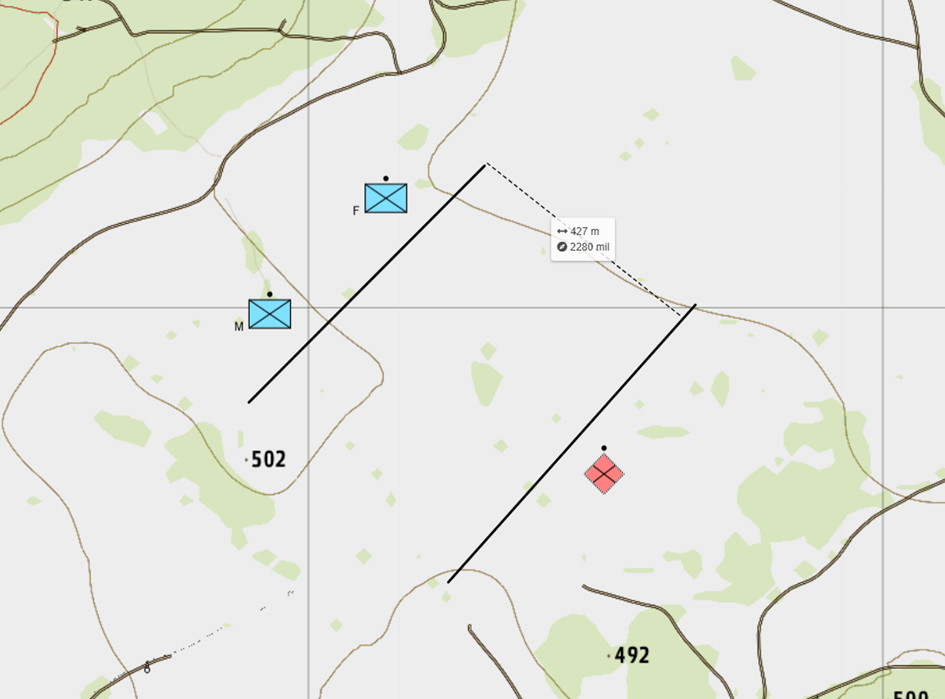
In this hypothetical scenario two friendly infantry squads face off against an enemy. Both forces have some light cover/concealment helping them defend their positions (marked with approximate black lines). The BLUFOR units are tasked with defeating the enemy unit. Additionally for the purpose of the example, any flanking maneuvers are not possible.
The leader of the BLUFOR has a choice. They could send both squads to assault the enemy position and hope the numerical superiority will be enough or select one squad [M] to be the maneuver element and the other [F] to provide fire support. In that case the attack will look like something like this:
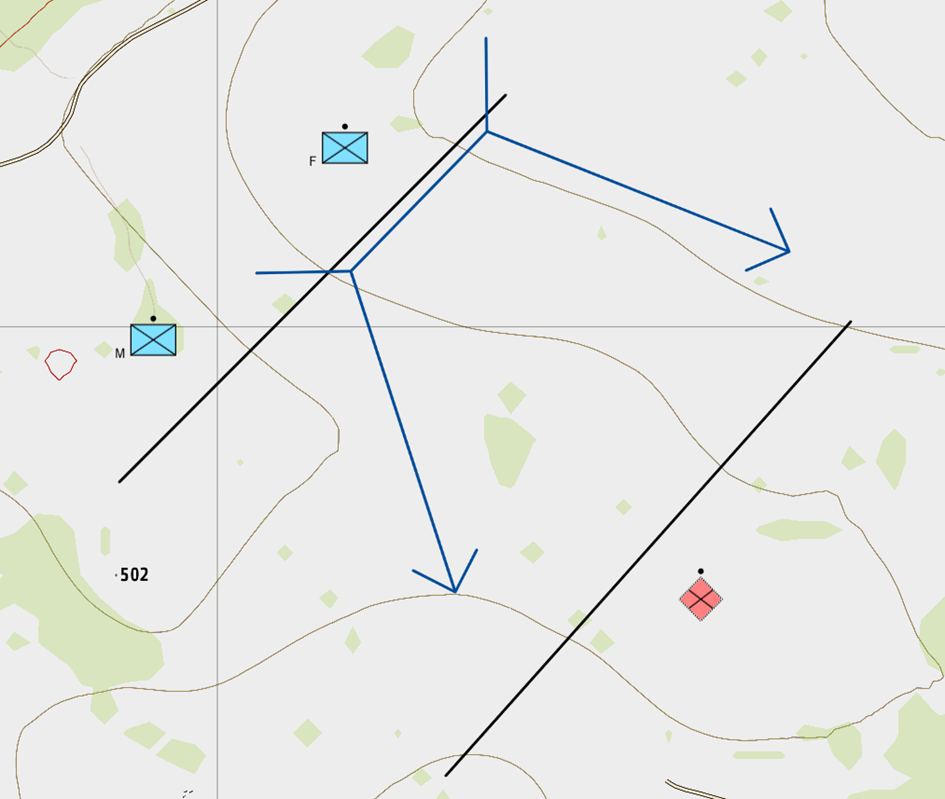
Both elements or just the fire element will suppress the enemy. Making it impossible for them to reposition or return effective fire.
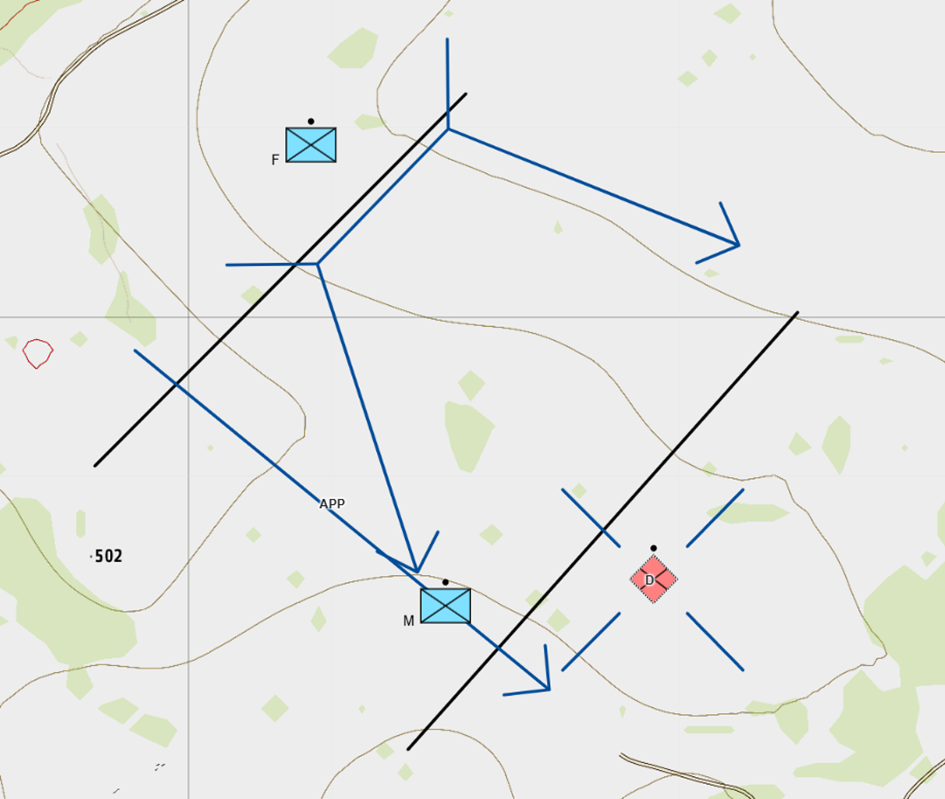
After establishing fire superiority, the maneuver element will move forward with the fire element still suppressing the enemy. After getting to the enemy position the maneuver element will secure it and communicate the fact to the fire element which will move up to the captured position to secure it against a counter attack.
The role of fire elements can be fulfilled by a lot of different assets. It can be a weapons/rifle squad, a machinegun crew, artillery or vehicles. What is important to remember is that infantry is always the main force securing a position. Any other assets are to support it.
Of course the example above is of a very simplified nature. What is important to take away from it is just the base idea of fire & maneuver. It is the base for everything from small unit movement to large coordinated assaults. That's why understanding it allows achieving a better tactical decision making skills.

0 Comments
Recommended Comments
There are no comments to display.
Join the conversation
You are posting as a guest. If you have an account, sign in now to post with your account.
Note: Your post will require moderator approval before it will be visible.